Conditions · Fertility & hormones
Repeated hormonal monitoring without phlebotomy.
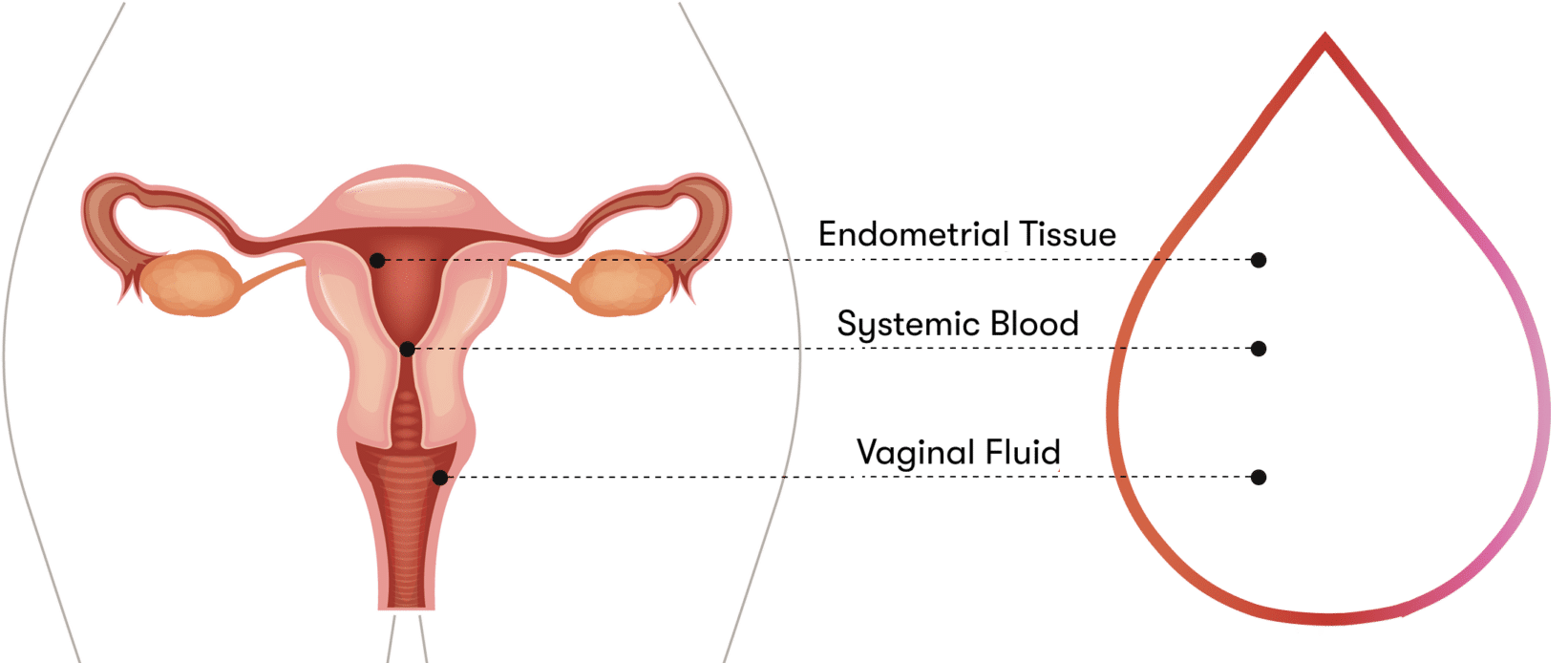
Hormonal panels require venous blood, scheduled by cycle day, with repeat draws to track dynamics. The Q-Pad enables at-home, monthly, multi-analyte panels that mirror venous draws at r > 0.9.
The condition
Infertility affects roughly one in six adults.
Infertility — failure to conceive after 12 months of unprotected intercourse — affects roughly one in six adults globally [1]. Workup spans ovulatory function, ovarian reserve, tubal patency, uterine cavity, and male factor; hormonal testing (FSH, LH, AMH, estradiol, progesterone, TSH, prolactin) is central. Hormonal disorders adjacent to infertility (PCOS, hypothalamic amenorrhoea, thyroid dysfunction) are frequently underdiagnosed.
Standard of care
Phlebotomy is the bottleneck.
Hormonal panels require venous blood, scheduled by cycle day, and repeat draws to track dynamics. AMH is the most established marker of ovarian reserve and is increasingly used in fertility counseling and treatment monitoring [2]. The logistics of repeated phlebotomy are the main barrier to routine, longitudinal hormonal data outside fertility clinics.
Why menstrual blood
Multi-analyte, monthly, at home.
The Q-Pad enables at-home, monthly, multi-analyte hormonal panels with no clinic visit. Validated correlations with venous draws cover the standard fertility menu — FSH, LH, AMH, estradiol, TSH — at r > 0.9 [3]. The format is well suited to longitudinal monitoring before, during, and after treatment.
Qvin's role
An anchor menu on the Q-Pad.
Fertility and hormones are among Qvin's earliest validated menus and continue to anchor the chemistry/immunoassay surface of the Q-Pad. Active partnerships explore home monitoring across IVF cycles and in PCOS workup. Read more on Science.
References
Sources
- World Health Organization. Infertility prevalence estimates 1990–2021. WHO, 2023. who.int.
- Broer SL, Broekmans FJM, Laven JSE, Fauser BCJM. Anti-Müllerian hormone: ovarian reserve testing and its potential clinical implications. Human Reproduction Update 20(5):688–701, 2014. doi.org/10.1093/humupd/dmu020.
- Naseri S, Rosenberg-Hasson Y, Maecker HT, Avrutsky MI, Park CL. Demonstration of menstrual blood as a viable source for screening and diagnostic clinical applications: a pilot study. BMC Women's Health, 2023. bmcwomenshealth.biomedcentral.com.
Other conditions