Conditions · Endometriosis
A disease defined by diagnostic delay.
Endometriosis affects an estimated 190 million people globally. The average time from symptom onset to surgical diagnosis is 7–10 years. Menstrual blood is the only routinely available clinical sample that carries intact endometrial tissue from the patient.
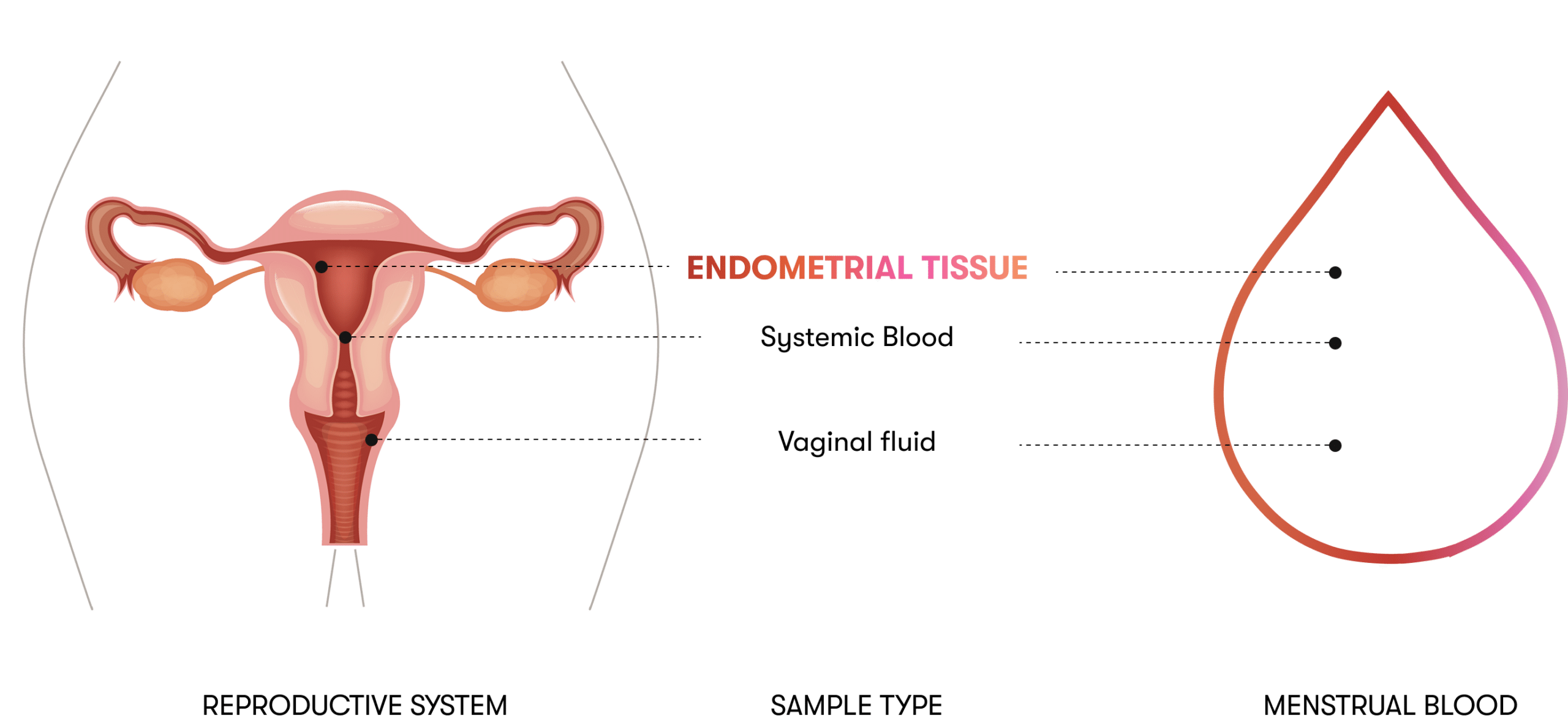
The condition
Chronic, heterogeneous, undertreated.
Endometriosis is a chronic inflammatory disease in which endometrial-like tissue grows outside the uterus, causing pelvic pain, dysmenorrhea, dyspareunia, and infertility. It affects an estimated 10% of reproductive-age women globally, or roughly 190 million people [1]. There is no cure, treatment is symptomatic, and the disease is heterogeneous in presentation and severity.
Standard of care
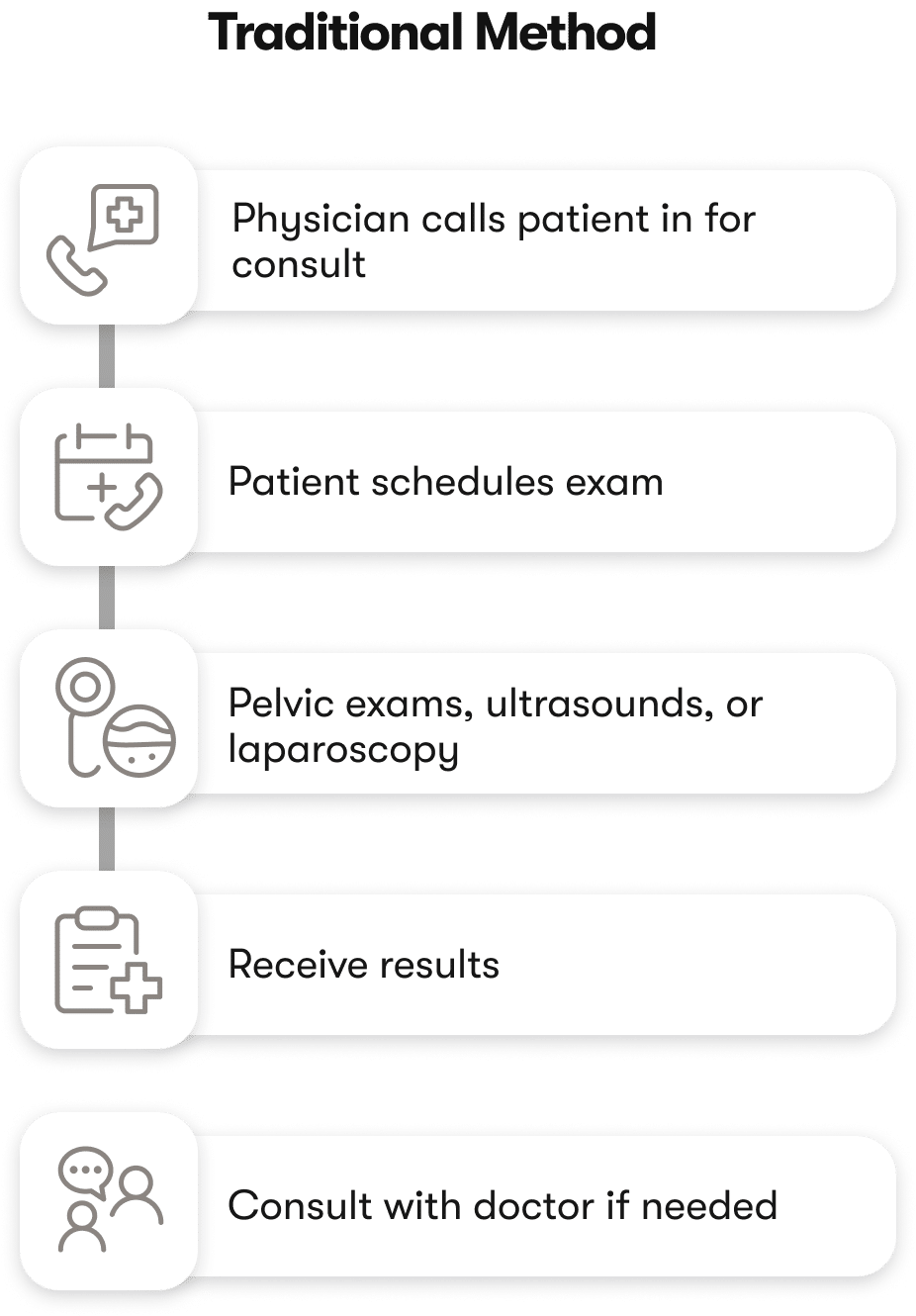
Diagnosis still requires surgery.
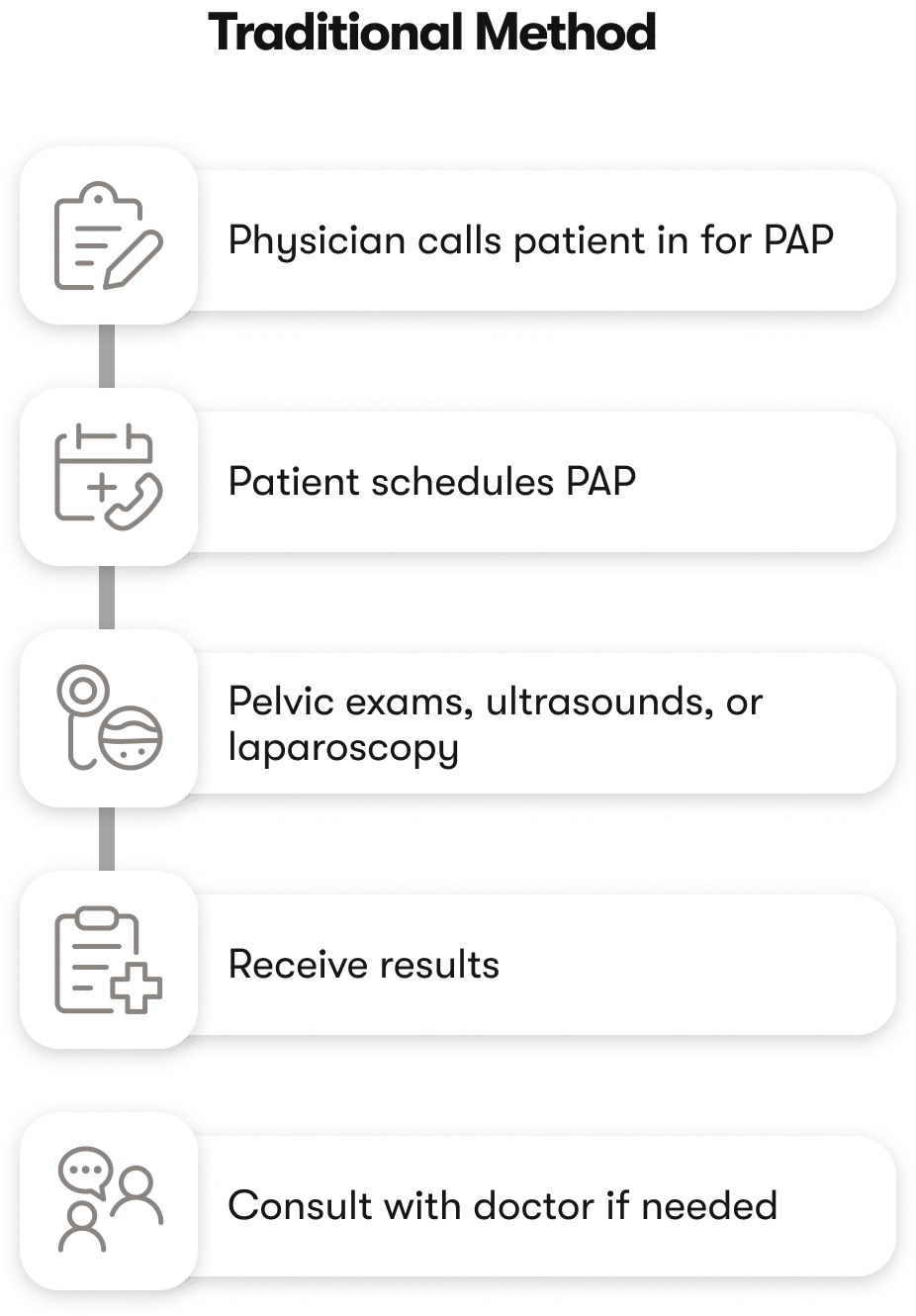
Diagnostic delay is the defining feature: the average time from symptom onset to surgical diagnosis is 7–10 years across most studied populations [2]. Imaging (transvaginal ultrasound, MRI) detects only the more extensive forms; the gold standard remains laparoscopic visualization with biopsy — surgery, in other words, just to get a diagnosis. There is no validated non-invasive biomarker test in clinical use.
Today
With Q-Pad
Why menstrual blood
The disease-relevant tissue, in the sample itself.
Endometriosis is, by definition, a disease of misplaced endometrial tissue. Menstrual blood is the only routinely available clinical sample that contains intact endometrial tissue from the patient. Decades of work on retrograde menstruation and endometrial transcriptomics suggest the endometrium of women with endometriosis differs at molecular and cellular levels from that of unaffected women [3]. A non-invasive sample that carries the disease-relevant tissue directly is the right starting substrate for biomarker discovery.
Qvin's role
A discovery-track program.
Endometriosis is one of Qvin's discovery-track research programs, using both Q-Pad-collected DMS and cup-collected research samples to identify candidate biomarkers in collaboration with academic partners. Translation into a regulated screening or aid-in-diagnosis assay is the long-term goal. Read more on Science.
References
Sources
- Zondervan KT, Becker CM, Missmer SA. Endometriosis. New England Journal of Medicine 382(13):1244–1256, 2020. doi.org/10.1056/NEJMra1810764.
- Nnoaham KE, Hummelshoj L, Webster P, et al. Impact of endometriosis on quality of life and work productivity: a multicenter study across ten countries. Fertility & Sterility 96(2):366–373.e8, 2011. doi.org/10.1016/j.fertnstert.2011.05.090.
- Bulun SE, Yilmaz BD, Sison C, et al. Endometriosis. Endocrine Reviews 40(4):1048–1079, 2019. doi.org/10.1210/er.2018-00242.
Other conditions