Conditions · Menopause transition
A decade of physiology, almost no monitoring.
The menopause transition spans years and overlaps with rising cardiometabolic risk — yet most women navigate it without longitudinal biomarker data. The Q-Pad enables a longitudinal endocrine record at home.
The condition
A multi-year reproductive-aging window.
The menopause transition is the multi-year reproductive-aging window leading to the final menstrual period (FMP), defined retrospectively after twelve months of amenorrhoea. The Stages of Reproductive Aging Workshop (STRAW+10) divides the transition into early and late perimenopause based on cycle variability and hormonal markers; perimenopause typically begins in the mid-40s and lasts 4–8 years [1]. Symptom burden — vasomotor, sleep, mood, cognition, urogenital, cardiometabolic — is substantial.
Standard of care
Diagnosed clinically, monitored rarely.
Menopause is diagnosed clinically. Hormonal testing is rarely indicated in routine perimenopausal care because levels fluctuate cycle-to-cycle, and a single venous draw is uninformative [2]. As a result, most women navigate the transition without longitudinal biomarker data — even though it spans a decade and overlaps with rising cardiometabolic risk.
Why menstrual blood
Multi-cycle hormonal data, at home.
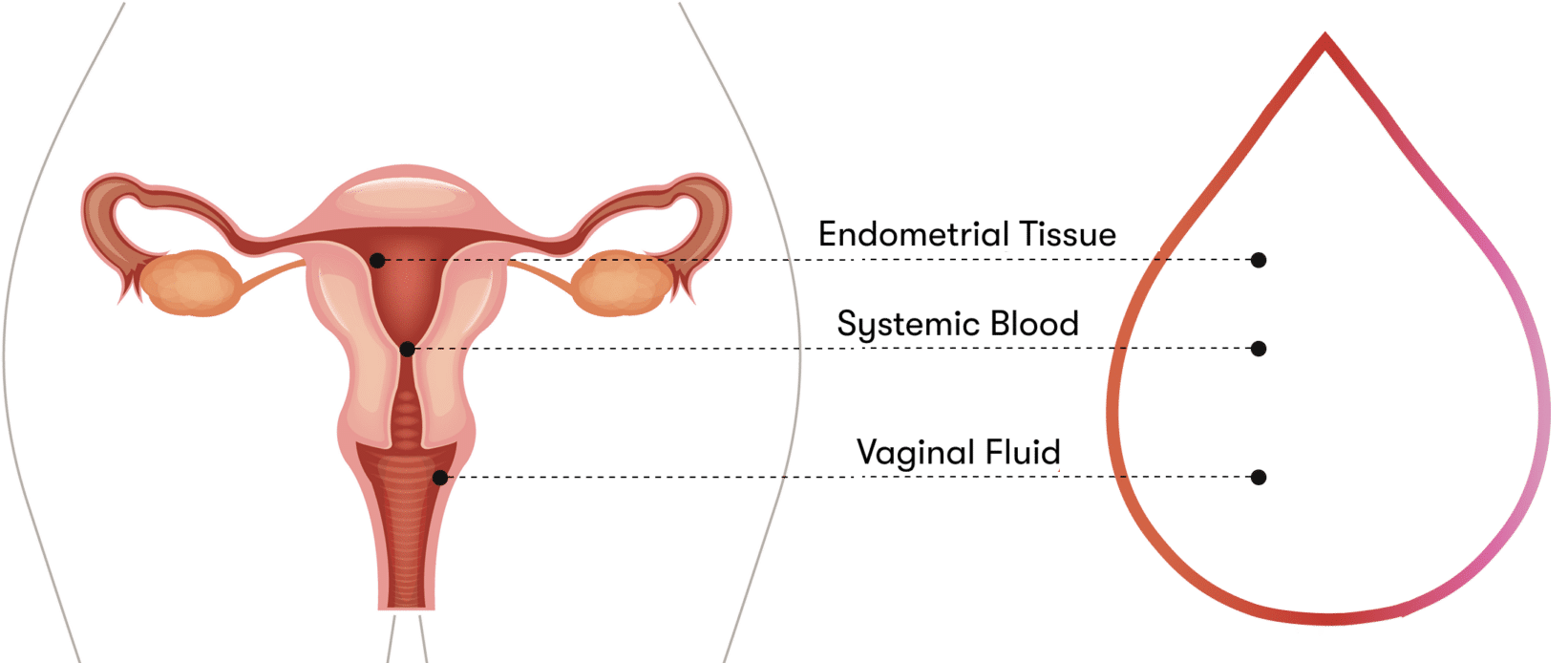
The Q-Pad's recurring at-home collection format is what hormonal monitoring across the transition has lacked. Validated correlations between menstrual blood and venous draws for FSH, LH, estradiol, AMH, and TSH support multi-cycle monitoring of the very analytes that change through perimenopause [3]. A second sample type — endometrial-derived signal — opens additional research questions about uterine aging that aren't accessible from peripheral blood.
Qvin's role
Active perimenopause work.
Menopause is one of Qvin's most active programs, with research collaborations exploring perimenopause biomarkers and a longitudinal cohort tracking the menopause transition. The clinical end-point is a longitudinal home-collection panel that helps clinicians and patients navigate the transition with evidence rather than guesswork. Specific institutional collaborators and funders are reserved until each program is individually cleared for public disclosure.
References
Sources
- Harlow SD, Gass M, Hall JE, et al. Executive summary of the Stages of Reproductive Aging Workshop +10. Journal of Clinical Endocrinology & Metabolism 97(4):1159–1168, 2012. doi.org/10.1210/jc.2011-3362.
- National Institute for Health and Care Excellence (NICE). Menopause: diagnosis and management (NG23). NICE guideline, 2015 (updated). nice.org.uk/guidance/ng23.
- Naseri S, Rosenberg-Hasson Y, Maecker HT, Avrutsky MI, Park CL. Demonstration of menstrual blood as a viable source for screening and diagnostic clinical applications: a pilot study. BMC Women's Health, 2023. bmcwomenshealth.biomedcentral.com.
Other conditions